

Spiritual Journal
A spiritual journal supports contemplation, prayer, meditation, and tracking of inner growth. It captures insights, questions, and transformative experiences that occur on a personal spiritual path. Regular entries deepen practice, clarify beliefs, and chart progress over time.
Purpose of a Spiritual Journal
Spiritual journals document inner experiences, revelations, and practices that shape one’s faith or spiritual life. They provide a safe space for exploration without judgment and encourage consistent spiritual discipline.
Daily Reflections
- Record prayers, meditations, or reflections to build a steady spiritual routine.
Practices & Rituals
- Note rituals, readings, or practices that nourish the spirit and their effects.
Questions & Doubts
- Jot down questions, doubts, and how they evolve to foster deeper understanding.
Gratitude & Awe
- Capture moments of gratitude or awe to cultivate humility and presence.
Dreams & Synchronicities
- Record meaningful coincidences or dreams that feel spiritually significant.
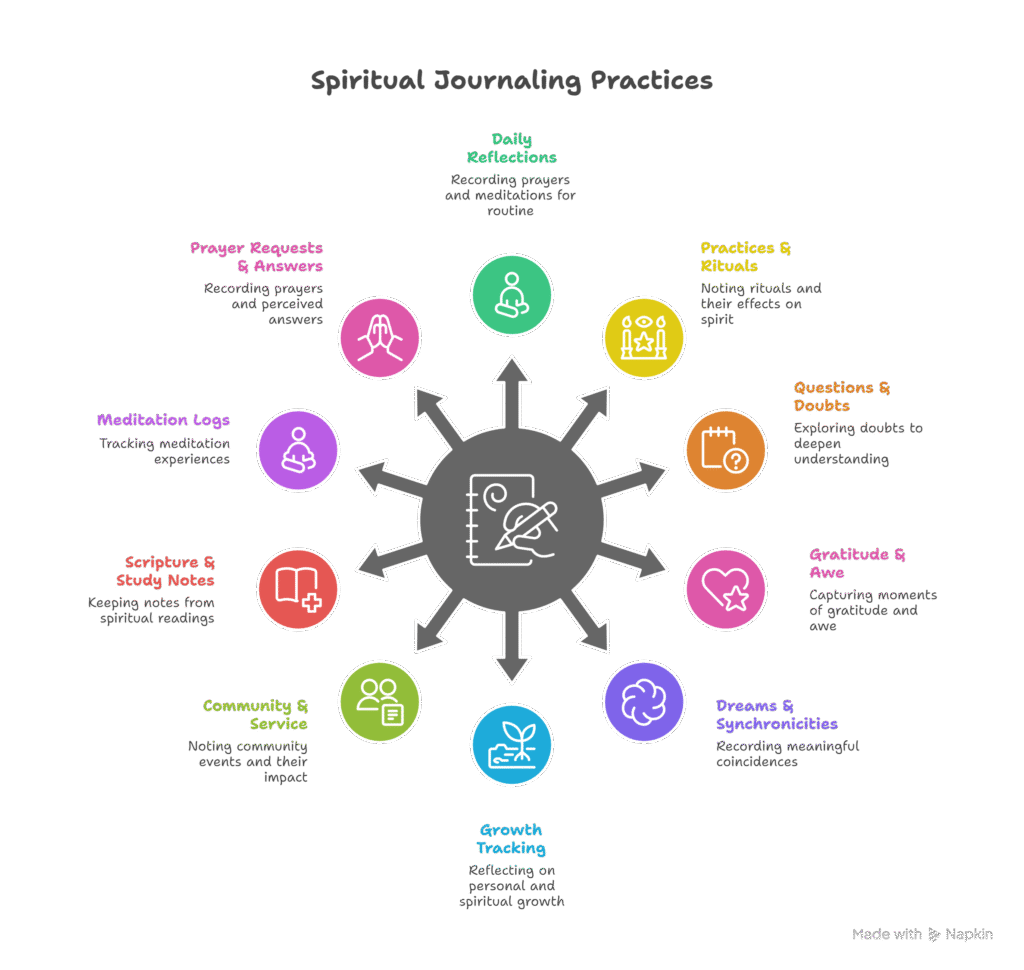
Growth Tracking
- Reflect on personal growth, shifts in belief, and changes in practice over months or years.
Community & Service
- Note community events, service, and how they impact your spiritual life.
Scripture & Study Notes
- Keep notes from readings, sermons, or teachings that resonate deeply.
Meditation Logs
- Track meditation length, techniques used, and notable experiences.
Prayer Requests & Answers
- Record prayers and any perceived answers or developments related to them.
How to Start a Spiritual Journal?
Begin with a short daily practice—five minutes of reflection or gratitude—and note anything meaningful that arises. Over time, expand practices and review entries to notice spiritual growth and recurring themes.
Start Small
- Commit to a brief daily reflection to make journaling sustainable and meaningful.
Record Practices
- Note meditations, prayers, or readings and how they affected your day.
Ask Questions
- Write down spiritual questions or doubts as a path to deeper inquiry.

Note Synchronicities
- Record meaningful coincidences or dreams that prompt reflection.
Review Periodically
- Revisit entries monthly or yearly to observe growth and changing patterns.
Spiritual Journal Prompts
A spiritual journal is not tied to any single religion. It is a place to explore meaning, gratitude and inner life in your own words. These prompts suit people from any tradition, or none.
- When did I feel most at peace this week, and what was I doing?
- What am I grateful for that I usually overlook?
- Which values do I want my daily choices to reflect, and where do they fall short?
- What question about life, purpose or belief am I sitting with right now?
- Whom do I need to forgive, including myself, and what would that make possible?
- What passage, prayer, poem or teaching spoke to me recently, and why?
Building a Simple Daily Practice
Choose a quiet anchor
Pair the journal with something calming, such as morning tea, a few minutes of silence or the end of an evening walk. Habits stick when they attach to existing routines.
Start with stillness
Sit for two minutes, breathe slowly, and only then write. The pause changes the quality of what comes out.
End with one intention
Close each entry with a single line about how you want to live the next day: patient, generous, present. Over time these lines reveal what matters most to you.
A Sample Spiritual Journal Entry
Sunday, early morning. Sat on the balcony before anyone woke up. The city was quieter than I thought it could be. I noticed how rarely I stop without a purpose. Grateful for my mother’s health and for this ordinary hour. Struggling with impatience at work, and wondering what it would look like to meet it with kindness. Intention for tomorrow: listen fully before replying.
Spiritual Journal FAQs
Do I need to be religious to keep one?
No. A spiritual journal is about meaning, values and inner life. You can write from a faith tradition, from a secular outlook or from somewhere in between.
What if I run out of things to write?
Copy out a line from something you are reading and respond to it in a few sentences. A single quotation can open a surprising amount of writing.
How does it differ from a gratitude journal?
Gratitude is one part of it. A spiritual journal also holds questions, doubts, values and reflection on your direction in life. For a lighter companion practice, try the mood tracker.
To develop a calm, regular writing practice, see the 4-week diary entry course at Diary Entry.
Conclusion
A spiritual journal is a companion on the inward journey, helping to clarify beliefs and record moments of transformation. Through consistent practice, it becomes a record of growth, questions, and grace that can be revisited for guidance and inspiration. Whether used for quiet reflection or formal study, it deepens spiritual life and nurtures ongoing discovery.