

Travel Journal
A travel journal captures journeys, experiences, and discoveries while traveling. It preserves sensory details, practical tips, and emotional reflections that are often lost over time. A well-kept travel journal becomes both a memory bank and a practical guide for future trips.
Purpose of a Travel Journal
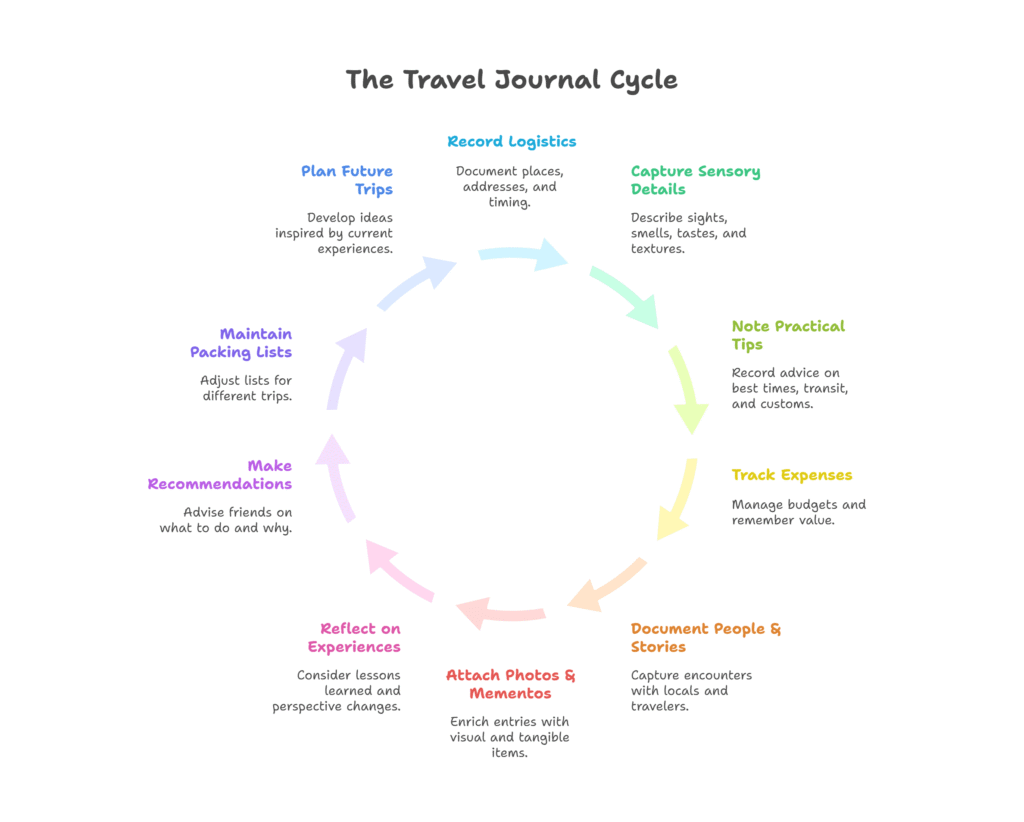
Travel journals record logistics, memorable moments, and cultural impressions to enrich the travel experience and preserve memories.
Itinerary Notes
- Log places visited, addresses, and timing to create a clear travel record.
Sensory Details
- Write about sights, smells, tastes, and textures to relive places vividly.
Practical Tips
- Record tips like best times to visit, transit tricks, and local customs.
Expense Tracking
- Note costs to manage budgets and remember the value for future planning.
People & Stories
- Capture encounters with locals or fellow travelers as memorable anecdotes.
Photos & Mementos
- Attach photos, tickets, or sketches to enrich entries.
Reflection
- Reflect on what the trip taught you or how it changed your perspective.
Recommendations
- Note what you’d recommend to friends and why.
Packing Lists
- Maintain packing lists and adjustments for different trips.
Future Planning
- Record ideas for future trips inspired by current experiences.
How to Start a Travel Journal?
Begin by noting the date, location, and a quick snapshot of your first impressions each day. Keep entries short but include one sensory detail and one practical tip to make entries rich and useful.
Date & Location
- Start each entry with time and place to anchor memories.
Capture a Moment
- Record a single vivid moment—an encounter, a meal, or a view—that defines the day.
Save Mementos
- Collect tickets, labels, or small keepsakes to attach to entries.
List Tips
- Note logistical tips like transport options and best times to visit attractions.
Reflect
- End with a short reflection about what the day taught you.
Travel Journal Prompts for Every Stage of a Trip
Before you leave
Write why you chose this destination, what you hope to feel, and one fear or worry. Sketch your plan loosely. These entries make a fascinating comparison with what actually happened.
On the road
- What did I see, hear and smell in the first ten minutes after arriving?
- What was the best meal today, and who or what made it memorable?
- What surprised me about this place compared with what I expected?
- Which small conversation will I remember from today?
- What would I do differently if I had this day again?
After you return
Within a week of getting home, write a summary page: top three moments, one lesson, one thing you would skip and one tip for a friend visiting next. This page becomes the quick reference you will actually reread.
A Sample Travel Journal Entry
Day 3, Jaipur, 7:10 pm. Climbed the fort steps just before sunset, when the stone turned the colour of honey. A shopkeeper insisted I try cardamom tea and then refused payment. Tip: go early, carry small notes, and wear shoes you do not mind getting dusty. Spent about 1,800 rupees today. I want to come back in winter and stay longer.
The entry holds a place, a time, a sensory moment, a human encounter, a practical tip and a rough budget in a few lines. That mix is what makes a travel journal useful years later.
Travel Journal FAQs
How do I find time to write while travelling?
Use dead time: waiting for trains, breakfast, the end of the evening. Five minutes with a few keywords is enough, and you can expand the entry later.
Should I write by hand or on my phone?
Handwriting feels more personal and works without battery or signal, while phone notes are faster. A good compromise is quick phone notes during the day and a handwritten summary at night.
What if I am not a confident writer?
Write the way you talk. Lists, short phrases and sketches all count. For more ideas, read our full travel journal guide.
To sharpen your descriptive writing and build a daily habit, explore the 4-week diary entry course at Diary Entry.
Conclusion
A travel journal bridges the gap between experience and memory, preserving details that fade quickly. It becomes a personal atlas of places, tastes, and people, useful both for nostalgia and future planning.