

A diary entry is a personal, dated record of what happened to you and how you felt about it. It has no strict rules, but a simple structure makes it much easier to start, finish and enjoy. This guide shows the format, the steps and a full example you can copy.
What Is a Diary Entry?
A diary entry is a short piece of first-person writing, usually written the same day or evening. It captures events, thoughts and emotions while they are fresh. For school answers, see the diary entry word limit by class and the ending format of a diary entry. Unlike a formal essay, it is written for yourself, so it can be honest, informal and unfinished.
The Basic Diary Entry Format
- Date and day: write it at the top (see how to write the date in a diary entry), for example “Monday, 3 November 2026”.
- Time or place (optional): useful for trips, events or special days.
- Opening line: many writers begin with “Dear Diary” or simply with the main event of the day.
- Body: describe what happened, who was there and how you felt.
- Closing thought: end with a lesson, a hope or a plan for tomorrow, then sign off.
Steps to Write a Good Diary Entry
1. Choose one moment
You do not need to record the whole day. Pick the moment that stands out, whether it was a conversation, a mistake, a surprise or a small win, and write about that.
2. Add sensory detail
Details bring a moment back years later. Instead of “the park was nice”, write “the grass was still wet and a kid was chasing pigeons near the fountain”.
3. Write what you felt
Feelings are what make a diary different from a log. Name the emotion, then say what caused it. “I felt nervous because I had not practised enough” is more useful than “the presentation was stressful”.
4. End with a takeaway
Finish with one line about what you learned or what you will do next. This turns the entry from a record into a reflection. For ready-made layouts, see our diary template formats.
A Diary Entry Example
Tuesday, 4 November 2026, 9:30 pm
Dear Diary, today I finally spoke up in the team meeting. My heart was racing and my voice shook for the first sentence, but then it got easier. Meera nodded, and the manager asked a follow-up question. I felt proud and a little shocked that nothing terrible happened. Lesson: the fear is always bigger before I start. Tomorrow I will share one more idea.
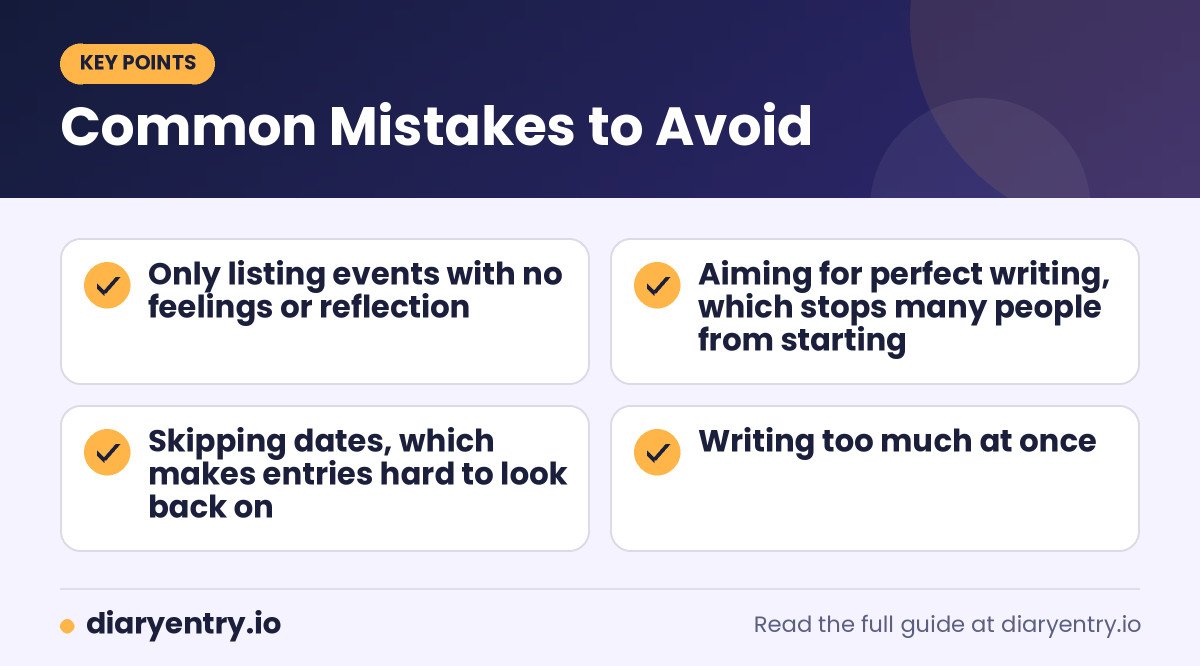
Common Mistakes to Avoid
- Only listing events with no feelings or reflection.
- Aiming for perfect writing, which stops many people from starting.
- Skipping dates, which makes entries hard to look back on.
- Writing too much at once. Five honest sentences a day beat one long entry a month.
Types of Diary to Try
Once you are comfortable with the basics, choose a focus. A secret diary is for private thoughts, a dream journal records what you remember on waking, a travel journal captures trips, and a goal-setting diary tracks progress toward what matters to you. For a job-focused log, try a work diary; for students, a school diary is a good start.
Build the Habit
The format is simple, but the habit is the hard part. If you want daily prompts, a clear structure and feedback from an instructor, the 4-week diary entry course at Diary Entry is designed to take you from occasional entries to a daily routine. For filled-in samples of many formats, see our journal examples.